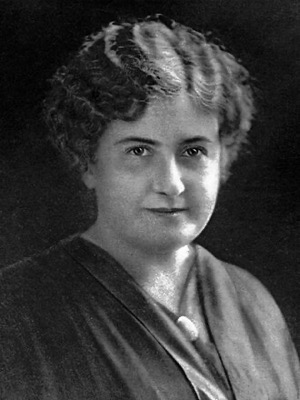
A visitor to my classrooms in Rome would often ask, upon seeing the children so absorbed, so quiet, so capable without my intervention: "What is your secret apparatus?" I would smile and explain that the secret was not apparatus at all, but liberty joined to order. I have lived to see many machines proposed for the instruction of children — mechanical devices, automatic correctors, contrivances that promise to relieve the teacher of her burden. I confess I regard such inventions with the same careful skepticism I bring to any material that enters the child's environment. The question is never whether a tool is clever. The question is whether it serves the child's own construction of himself.
Consider what happens when a child works with my sensorial materials — the cylinders, the pink tower, the binomial cube. Each material contains within itself a control of error. The child sees, without my saying a word, that the cylinder does not fit, that the tower is unstable, that something is wrong — and he corrects it himself. This is the whole art of the prepared environment: the adult withdraws, and the material speaks. If a new mechanism could truly do this — present a problem, allow the child's own hands and mind to discover the error, and then step back — I would not condemn it merely for being new. I have never been a woman who feared machinery for its own sake. I welcomed the microscope into my medical studies; I would not refuse a tool merely because it hummed rather than sat silent on a shelf.
But I have grave doubts about any device that answers too quickly, that removes the labor of the search. The child's intelligence is not filled from outside like a vessel; it is built from within, through the hands, through repetition, through the productive struggle with a real problem that resists him just long enough to demand his full attention. This is what I have called the "polarization of attention" — that deep concentration in which the child, absorbed in meaningful work, disciplines and constructs himself. A machine that gives the answer before the struggle has done its work does not educate; it merely occupies. I have seen well-meaning teachers make this same error with their own voices, correcting a child before he has had the chance to correct himself, and I have always considered this among the gravest disservices we commit against the young.
There is also the matter of the senses. My method rests on movement — the hand that touches, that grasps, that manipulates real, solid material with weight and texture. Whatever wonders an inventor may claim for an instrument that speaks or displays without being touched, I would ask: does it