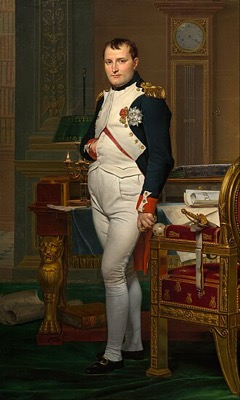
In June 1812, Napoleon marched roughly 500,000 soldiers into Russia — the largest army Europe had ever seen. By December, fewer than 30,000 walked back out.
The Russians never actually beat him in a decisive battle. What beat him was arithmetic. Napoleon's entire strategy for a decade had depended on armies that could live off the land they marched through and win fast enough that supply lines barely mattered. Russia was too big and too empty for that. Every mile deeper into the country stretched his supply lines thinner, while the Russians simply retreated, burned their own crops behind them, and let winter do the rest.
Napoleon had built an extraordinary machine that worked brilliantly under one specific condition — and he marched it directly into the one place that condition didn't hold, seemingly without seriously asking whether it would.
The lesson isn't "don't be ambitious" — Napoleon's ambition had worked for fifteen years before this. It's narrower: the thing that made you successful in every previous situation is not automatically true in the next one, and the bigger the commitment, the more that assumption deserves to be checked before you're already three weeks in with no way back.
Most people don't fail because they're reckless. They fail because they scale up a strategy that quietly depended on conditions nobody re-examined before betting everything on them again.