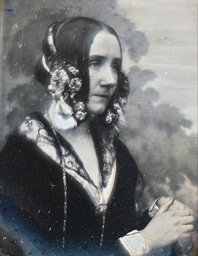
In 1843, Ada Lovelace was asked to translate an article about Charles Babbage's proposed Analytical Engine from French into English. It was a routine assignment. The article was written by an Italian engineer who had heard Babbage lecture, and it described what the machine might do.
Lovelace translated it, then did something no one asked her to do: she added her own notes. By the time she finished, her notes were roughly three times as long as the article itself.
In them she laid out how the engine could be instructed to compute a sequence of numbers, a step-by-step method that is often described as the first published computer program. But the part that matters most for us isn't the math. It's a leap in imagination. Babbage thought of his machine as a calculator. Lovelace saw that if numbers could stand for other things, such as musical notes, the machine might in principle work on more than arithmetic.
That idea took about a century to fully arrive. She was writing it down before a single such machine had been built.
The lesson here is about what to do with a small assignment. Most of us treat a task as the boundary of what we were asked to do, and we deliver exactly that. Lovelace treated the translation as a way in, a reason to understand the thing so deeply that she could see what its own inventor had missed.
If you're working on something that feels like routine translation right now, summarizing, relaying, implementing someone else's idea, it's worth asking what you'd notice if you understood it well enough to write the footnotes.